
Each month we bring you the latest updates from across our work. If you'd like to be the first to receive the latest direct to your inbox, subscribe to our newsletter here.
🎓Applications closing soon for School for Everyday Democracy
📝 Inviting feedback on the Sciencewise programme
🌍 Reflections from the DR&D conference
⛔ What barriers do young people face to accessing green jobs?
💭 Designing dialogue on violence against women and girls in public space
🤝 Could a citizens’ assembly help end the “SEND doom loop” ?
🚌 Can people with opposing views on transport come together to find common ground?
📰Citizens' assemblies back in the spotlight in Northern Ireland
🕛 Average overall reading time: approx 6 minutes.
🤔 This month, we've been thinking a lot about what it takes to create spaces where meaningful change becomes possible.
Whether it's young people facing barriers to green jobs, women navigating unsafe streets, or communities divided over transport, the pattern is the same: the solutions exist, but only if we're willing to listen differently.
So, a question that applies everywhere, from Stormont to local councils: are leaders willing to listen, learn and act on what people have to say?
Because when we create the right conditions, time, balanced evidence, facilitated space, people consistently show up with wisdom, nuance, and care for the common good.
This newsletter is full of examples of what happens when we do 👇
🎓Applications closing soon for School for Everyday Democracy
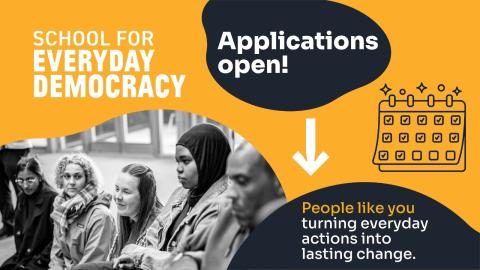
Applications for the fourth cohort of The School for Everyday Democracy close on 2 November, and it's an incredibly exciting time to be joining the programme.
Our first cohort recently graduated, and cohorts 2 and 3 have recently taken part in residential weekends where we've seen a vibrant network of changemakers beginning to crystallise. Champions are building lasting connections, sharing learning, and supporting one another to drive change in their communities. The energy and solidarity across the cohorts has been inspiring to see.
This UK-wide programme supports people who want to create change in their communities by building skills, connections, and confidence. We're taking a targeted approach to reach people who might not usually put themselves forward - especially those facing barriers to making change. This isn't for professional activists; it's for people who care deeply about their communities and want to take the next step.
👉 Find out more and apply here
Know someone who'd be a great fit? Please share this opportunity with your networks by using our comms toolkit here.
📝 Inviting feedback on the Sciencewise programme
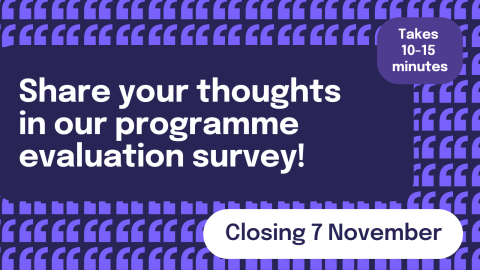
Sciencewise is currently running a programme-wide evaluation to better understand its impact in supporting high-quality public dialogue across science and technology.
As part of this work, the team is inviting feedback from those who have worked with or engaged with the programme, as well as those who are less familiar.
Alongside evaluation of each dialogue project, Sciencewise also works with an independent Monitoring, Evaluation and Learning partner to review the overall programme. This helps build a shared evidence base of best practice in public dialogue and ensures that learning from across projects continues to improve future work.
We invite you to share your reflections before 7 November 2025.
Insights from this evaluation will help strengthen the evidence for what works in public dialogue and shape how the programme continues to evolve.
👉 Read more and complete the short survey
🌍 Reflections from the DR&D Conference 2025
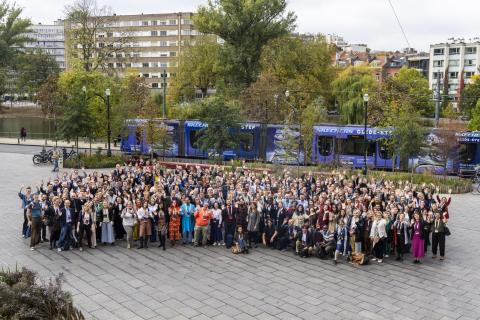
This month, Steph, Maddie and Paul of the Involve team attended the Democracy R&D Conference, joining a vibrant global community of individuals and organisations committed to strengthening democratic innovation.
The conference brought together inspiring examples from around the world — offering valuable lessons for our work in the UK. With a third of participants from the global majority, we learned from diverse approaches and success stories that can inform efforts here.
Key themes emerged: the need to focus on impact, take challenges to our democracies seriously, and show how deliberative approaches can dovetail with traditional processes. There was recognition that we shouldn't be too purist about citizens' assemblies — that many innovations are happening at pace, including exciting developments in technology and other emerging practice.
We also had the opportunity to hold a workshop exploring how deliberative practice in the global north can engage more honestly with deeper patterns of injustice and systemic violence. Using Vanessa Machado de Oliveira's Hospicing Modernity as a lens, we invited participants into reflective inquiry. Participants brought energy, curiosity, and some discomfort, and many appreciated the space to slow down and think critically about our work.
Coming together with colleagues reminds us of both the challenges we face and the strength of our collaborative deliberative community. We look forward to continuing to work together to share learning and create the impact needed to meet the challenges.
⛔What barriers do young people face to accessing green jobs?
Green jobs are central to a climate-friendly future — and the urgency is clear. This month, the Climate Change Committee warned that the UK must prepare for a 2°C warmer world by 2050, requiring major shifts in the labour market.
Young people will need to be working in green jobs, but that change is happening too slowly as they continue to face barriers to accessing these careers.
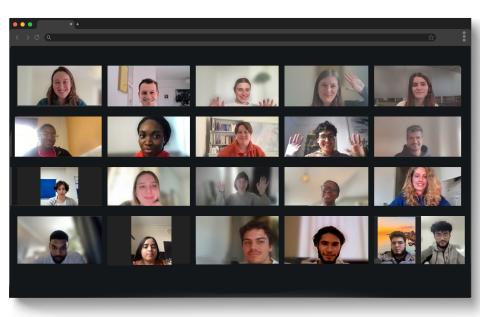
Over recent weeks, we've worked with the New Economics Foundation to bring together 42 young people aged 16-24 across three deliberative workshops. Together, they explored their experiences, identified barriers, and developed ideas to help more young people enter the climate sector.
The timing is critical: with government plans to scale up green jobs, there's a real opportunity to shape policy so young people can access these roles. Insights from the workshops will feed into NEF's strategy to influence government policy in 2026.
We'll be sharing findings soon — watch this space.

💭Designing dialogue on violence against women and girls in public spaces
Rebekah McCabe, our Head of Northern Ireland, has written a personal reflection on designing public dialogue on the prevention of violence against women and girls (VAWG) in Belfast's outdoor public spaces.
The dialogues, which took place in June 2025, brought together 45 residents to explore what Rebekah describes as a ‘deceptively simple question’: How can we prevent violence against women and girls in Belfast’s outdoor public spaces?
Writing on her new Substack, Rebekah reflects on the process design choices — particularly the decision to use enclave deliberation, separating groups by age and gender to allow for deeper discussion and to hear perspectives that might struggle to surface in mixed groups. Participants were able to surface and articulate a shared reality: that women don't experience violence as an act so much as an atmosphere that shapes how women and girls move through the city.
As Rebekah writes: "Safety is not designed for people; it's built with them."
👉 Read Rebekah's reflections here
👉 Project report: Safer Streets, Shared Voices
👉 Follow Rebekah's Substack for more reflections on democracy, belonging, and public participation
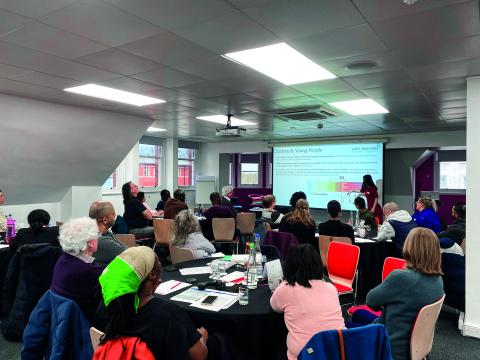
🤝 Could a citizens’ assembly help end the “SEND doom loop” ?
Writing in Tes recently, academics Rob Webster and Brahm Norwich make the case for a citizens' assembly to help break the impasse on SEND reform. Our experience working with Rob, Brahm and other partners to deliver what is believed to be the UK’s first citizens’ panel on school inclusion offers a hopeful foundation and important learning to build on.
Funded by The RSA's Innovation in Democracy programme on behalf of UK Research and Innovation, the project had two aims: understanding how citizens' panels can be made more inclusive, and exploring how education professionals, young people with and without SEND, and partners can work together on recommendations for more inclusive schools.
A key part was involving young people with SEND in shaping the process itself. Preparatory online meetings allowed them to share what would make sessions accessible and engaging, ensuring the approach was responsive to their needs from the start. The panel agreed on recommendations shaped by and for young people with SEND, which could have real-world impact on their school experiences.
As government and local authorities consider future SEND reforms, there's a genuine opportunity to build on this foundation. When everyone can participate fully, all the voices needed for progress can be heard.
👉 Learn more about the Inclusive Schools Citizens Panel here
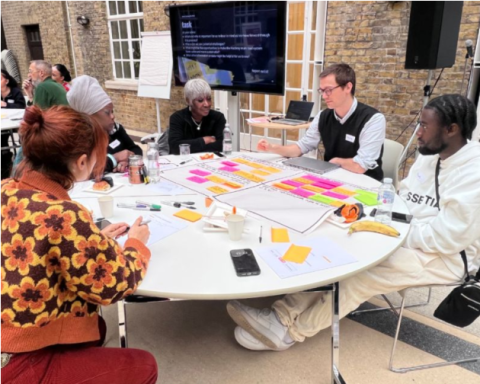
🚌 Can people with opposing views on transport come together to find common ground?
We're partnering with LSE Cities and Hackney Council on a deliberative engagement process that brings together 22 local residents, selected to reflect Hackney’s diversity and range of views, to explore transport issues in the borough.
Over four workshops, participants are exploring concerns about congestion, road safety, air quality and accessibility, hearing from experts, and developing recommendations for Hackney's next Transport Strategy.
This is deliberative engagement in action: creating space for people with different perspectives to listen, learn, and collaborate on solutions to shared challenges.
The group's insights will help shape Hackney's draft Transport Strategy, which will go out for wider public consultation in 2026.
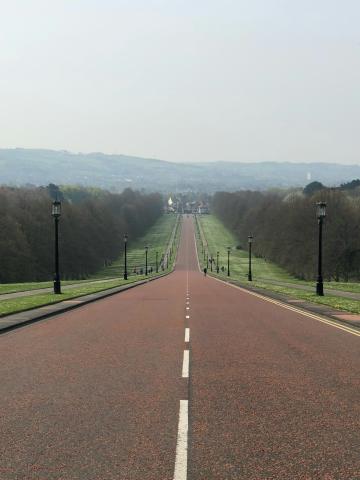
📰Citizens' assemblies back in the spotlight in Northern Ireland
The Belfast Telegraph is reporting on growing calls for a citizens' assembly to help keep Stormont on track. 🔗
It's encouraging to see this conversation gaining momentum, and it got us thinking about how we'd frame the opportunity to decision makers. 👇
Why citizens' assemblies work for contested issues
When backed by genuine political commitment, citizens' assemblies create the conditions for informed, nuanced debate on issues where traditional politics has become stuck. They bring together everyday people (selected through a civic lottery to reflect the population), give them time with balanced expert evidence, and space to deliberate in facilitated discussions where everyone's perspective matters.
The result? Sensible and ambitious agreements centred on ideas of a common good, plus recommendations that capture both consensus and minority views.
We've seen them help break deadlocks on everything from environmental challenges to health and social care. They bring decision makers face-to-face with citizens and surface solutions that traditional politics might miss.
As our head of Northern Ireland, Rebekah McCabe, put it:
‘The question for Stormont isn't whether we need new approaches to contested issues. Anyone paying attention can see that we do. The real question is: are our political leaders willing to listen, learn and act on what the public has to say?’
📖 More on this: We've updated our FAQ on citizens' assemblies for Northern Ireland — useful if you're having these conversations too.
----------
That's all for this month! Thank you as always for your ongoing support.
Best wishes,
The Involve Team
That's all for now! Remember to sign up for our newsletter if you'd like to receive the latest news from us directly to your inbox.