
Background: A crisis of ecology and democracy
Lough Neagh is the largest freshwater lake in Ireland and Britain, and the source of drinking water for over 40% of Northern Ireland’s population. In recent years it has suffered a severe ecological collapse driven by agricultural run-off, failing wastewater infrastructure, sand extraction, and a governance vacuum that has allowed decades of damage to accumulate unchecked. The toxic cyanobacteria blooms which began on a large scale in the summer of 2023 made the scale of that failure impossible to ignore.
But the crisis at Lough Neagh is not only ecological. It is also institutional and democratic. Twenty different bodies claim some form of stewardship over the lough - government departments, councils, NGOs, partnerships - yet transparency is scarce and meaningful public involvement rarer still. Trust in responsible bodies is low. DAERA’s approach to engagement has focused on stakeholders rather than the general public, and on consultative rather than collaborative methods.
Against this backdrop, a long-standing question re-emerged with new urgency: who speaks for Lough Neagh and who should decide its future?
The Lough Neagh Citizens’ Assembly is a response to that moment and to a deeper argument: that decisions about the lough belong to the people who depend on it, and that conventional governance alone is not sufficient to meet the challenge.
Interest has grown in the idea of a Citizens' Assembly as a way to reimagine how decisions about the Lough are made - putting people and place at the heart of the conversation.
Elsewhere in the UK and in Scotland, Wales and Ireland, these democratic experiments are flourishing, proving that when people are given space, support, and respect, they can shape the future in ways no politican or agency can alone. Northern Ireland stands alone as the only part of these islands where citizens have not been invited into decision making in this way.
What we set out to do
In December 2024, Involve began working with environmental NGOs and local groups concerned by the lack of transparency, accountability, and public involvement in decisions about Lough Neagh. Interest has been growing in a Citizens’ Assembly to explore ownership, governance, and stewardship, but there is no shared vision or commitment to its outcomes.
In March 2025, we hosted Who Speaks for the Lough? - a dialogue-based event exploring democratic solutions. We believe a Citizens’ Assembly is a vital and timely addition to the conversation about the future of Lough Neagh. However, for it to be meaningful and effective, we recognise that it must be carefully planned and collaboratively developed.
The event generated a clear set of findings which shaped what we set out to do next:
- Conventional governance is failing. The complexity of the lough’s crisis cannot be addressed through traditional, top-down approaches alone.
- Trust and inclusion are foundational. Diverse stakeholders told us that they felt safe, heard, and respected in the deliberative space demonstrating what intentional dialogue can achieve even before a formal assembly begins.
- A citizens’ assembly offers a credible path. Participants left convinced that civic engagement has a key role to play in the lough’s recovery, and that an assembly could address the democratic deficit that has allowed its decline.
- Nature’s voice must be heard. There was a shared sense that the lough is not merely a resource to manage but a living entity deserving protection and representation in its own right.
Following Who Speaks for the Lough? We proposed a collaborative process to advocate, design, plan, and secure funding for a Citizens’ Assembly on the future of the Lough. We wanted to convene a diverse group, including landowners, academics, statutory agencies, public officials, environmental organisations, and community representatives to co-design the Assembly and build shared ownership of its outcomes.
This approach will ensure the Citizens’ Assembly complements and adds value to existing initiatives, such as the stakeholder-focused work led by the National Trust and the ongoing management efforts of the Lough Neagh Partnership.
By shaping the scope and agenda collaboratively, the Lough Neagh Assembly will be well-positioned to address complex and potentially contentious issues, such as rights of nature and changes in ownership. Ultimately, its goal will be to build public trust, deepen understanding, and foster consensus on the future stewardship of Lough Neagh.
We want to begin with a year-long collaborative process that brings together a wide range of people with an interest in the future of the Lough, to design, plan, advocate, and secure funding for a full citizens’ assembly that everyone can get behind.
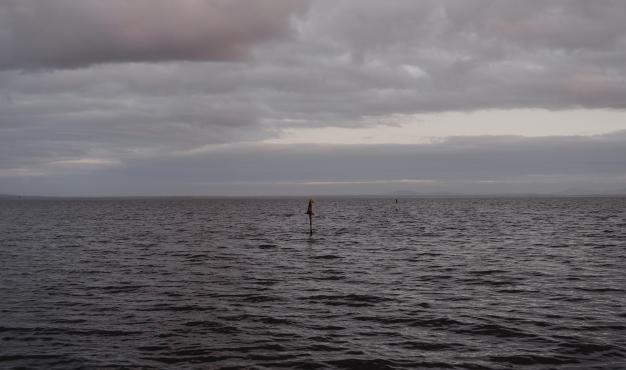
Our thanks to Joe Laverty for the use of his photography to enable the Lough to appear in these pages.
All images in the report are from Joe Laverty's long term Shallow Waters project on Lough Neagh.
Find out more the project here, visit his website here and follow Joe on Instagram: @joelavertyphotography
Progress so far
We secured funding from Aurora Trust in August 2025 to begin the work of preparing for a Lough Neagh Assembly.
We launched our plan to convene a co-design group to work collaboratively on that task at an online event in September 2025, after which we opened the nomination process for the co-design group.
The eligibility criteria was:
Commitment of time - approximately three hours every four to six weeks
Willingness to collaborate, including with people who hold different points of view to you.
A connection to the Lough, which may include personal, community, cultural, research, governance, or financial interests.
Curiosity about the potential of a Citizens’ Assembly and how that might be designed
We received 35 nominations and appointed 22 people to the co-design group, based on the following factors:
All criteria are met
Diversity of roles and relationships with the Lough
Representation of previously underrepresented voices
Range of expertise, including lived experience
Co-Design Group members
- Andy Griggs - ABC Council
- Anne Marie McStocker - Lough Neagh Stories
- Barbara Hughes - Step
- Bróna McNeill - NIEL
- Bronagh O’Kane - GrowIN and NFFN
- Ciaran Ferrin - Groundwork/ Ulster Wildlife
- Ciara Brennan - EJNI
- Dymphna Gallagher - NI Water
- Edwin Graham - local resident
- Elmarie Swanepoel - Forever Lough Neagh
- Gerry Darby - Lough Neagh Partnership
- James Orr - Friends of the Earth
- Johann Muldoon - local resident and business owner
- John Barry - Queens University
- Mairead Campbell - Queens University
- Michael Meharg - NFFN
- Pádraig Mac Niochaill - local resident
- Ruby Free - Surfers Against Sewage
- Ruth Hunter - Queens University
- Sinéad Mullan - local resident
- Thomas McElhone - local resident
- Victoria Magreehan - National Trust
The Co-Design Process
The co-design process is the heart of this phase. Rather than designing a citizens’ assembly and presenting it to communities as a fait accompli, we are building the Assembly’s design in active dialogue with the people it is intended to serve. This is what we mean by slow democracy: the careful work of asking the right questions before moving to answers.
A Lough Neagh Assembly co-design group has been formed, bringing together local residents, campaigners, NGOs, conservationists, researchers, and key stakeholders to guide the process. That group is addressing the following:
- The timing of the citizens’ assembly
- Fundraising decisions
- Involvement of children and young people
- Who should be eligible to participate in the Assembly, including questions of geography, residency, and whether participants from the Republic of Ireland should be included
- The scope and wording of the Assembly’s guiding question
- What balanced and comprehensive evidence would look like, spanning ecology, water systems, law, economy, lived experience, and advocacy
- What independent oversight of the Assembly process should involve
- How to secure political support and commitment to the Assembly’s recommendations
All decisions are being made by consensus. This work is generating a body of community knowledge directly shaping the Assembly’s design. It is also building the relationships of trust that will be essential when the Assembly itself launches: co-design participants are becoming advocates and connectors, extending reach into communities that might otherwise be sceptical of a formal deliberative process.
What comes next
The co-design phase will continue until August 2026. The remaining work will focus on:
- Completing co-design sessions and synthesising findings into a design specification for the Assembly
- Running a mini co-design process with children and young people, to develop options for the involvement of young people in the assembly
- Finalising the recruitment methodology, including strategies for communities currently underrepresented in formal participation
- Continued fundraising and resource mobilisation for the full citizens’ assembly
- Preparing for the public launch of the Assembly, with a view to convening its first full meeting in Autumn/ Winter 2026
The co-design process has generated strong foundations. The Assembly launches into a context of genuine public interest, a growing coalition of institutional support, and a design process that communities have shaped from the beginning. The democratic argument has been made; the relationships have been built. The work ahead is to translate that foundation into a deliberative process worthy of the trust placed in it and worthy of the lough itself.