

The challenge was familiar but difficult: how we heat and power our homes, businesses and communities are contributing to climate change. At the same time, energy bills are rising and pushing more households into fuel poverty. Communities are caught between environmental problems and the immediate need to keep their homes warm.
North Woolwich, is an area in the London borough of Newham, with multiple thriving transport links, a diverse community and quiet neighbourhood. It is a place with a rich industrial history by the docks and the river, with a relatively high rate of deprivation, making them particularly affected by rising costs. There is significant new development happening, which creates a unique opportunity for heat and energy projects like heat networks to be built from the ground up.
Newham Council had already been delivering their Just Transition Plan, which aims for a fairer, greener, healthier Newham. In particular, for “an energy system that’s resilient, equitable and not dependent on fossil fuels”. Their Net Zero Neighbourhoods programme is working on retrofitting and renovating housing to reduce carbon emissions. This included around North Woolwich and neighbouring areas, making it a suitable place to engage local residents about issues affecting their area. This is where we came in.
As part of Innovate UK’s Net Zero Living programme, Involve, Forum for the Future, Ipsos and Quantum Strategy & Technology ran a Citizen’s Visioning Process. The starting point was about building on local strengths and assets, by asking people what they valued about their area, alongside their hopes and concerns for the future, rather than the framing of ‘reaching net zero’.
In order for this to work, we needed to reach a diverse set of residents to represent North Woolwich’ community. We called these residents ‘forum members’. They were recruited via a type of civic lottery called sortition. We partnered with the Sortition Foundation to send letters to all North Woolwich residents inviting them to take part. The letter mapped out what they’d be getting involved with, and what their voice could do to change the place they called home. Residents completed a form to express their interest in taking part. From there, we selected a group of 22 residents who were broadly reflective of the area across various demographics.
This diversity of voices was crucial to the forum meaningfully engaging with and listening to local people. Forum members and local actors told us that North Woolwich has been left out of good things happening in other parts of Newham and that people feel that they are not listened to. Some are tired of being consulted without seeing results, and others felt that the area was being forgotten about. This experience was reflected in the focus and design of the forum - which centered on gathering residents' input that Newham Council truly needed to define their vision and workstream for placed based green energy projects in North Woolwich. Key actors who need to be part of transition (like local universities, community organisations and businesses) contributed throughout the process, to ensure wide ownership of the forum’s final recommendations and ensure the approach worked for local communities. The forum’s recommendations will directly inform Newham Council’s Just Transition Plan, ensuring community voices feed into a live decision-making process..
The question the forum answered was:
| Learning | Deliberation | Decision making |
|---|---|---|
Forum members learnt about the topic from a range of speakers, including those they requested themselves. Topics covered an introduction to climate change, local impacts and solutions. They did futures exercises to encourage critical thinking, creativity and thinking about the future implications of decisions made today. | Forum members discussed the information they had heard and developed a long list of ideas, weighing up potential ways forward. The council and local actors reviewed these and provided feedback. | Forum members worked together to review feedback from the council and local actors. They then agreed on: A map of what makes North Woolwich special A vision for the future Calls to action for how to get there
|
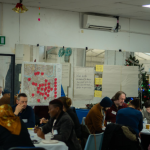
At five in-person meetings, the forum members heard from a range of speakers about climate change, heat and energy systems, and what can be done locally. These speakers offered expert knowledge, which would let the forum members make more informed decisions. The information they heard and who spoke was informed by an Advisory Panel of local actors such as energy providers, housing associations, local universities, and community organisations.
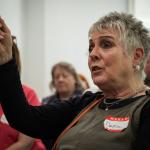
The forum members spent time reflecting on what they heard, but more importantly, what they knew from their own experiences. Over the course of the meetings, they talked over their thoughts and ideas through a deliberative process.
In our future vision, North Woolwich is an exemplar of a low carbon neighbourhood.
| Every home is fit for purpose: properly insulated and energy efficient at a set standard, with modern and affordable equipment like solar panels and smart meters. Grants are available to those who need it. | Managing energy consumption is simple, with a single central system in each home. |
| The local community actively benefits from a hyper localised renewable energy production, and waste goes to energy, not landfill. | Heat is harvested from the ground, from the air and from waste. |
| Everyone is able to heat and power their homes with cheaper electricity, and financial and technical help is easily available to those who need it. | There is greener and affordable transport, with reduced high emission vehicles, with more carpooling and dedicated cycle routes. |
| The air is cleaner and healthier. | Secure WiFi is free in community spaces in every neighbourhood. |
| There are community owned and maintained green spaces that use brown (abandoned) land, and which have more trees, areas for workouts, and solar lighting. | Building materials are carefully considered. |
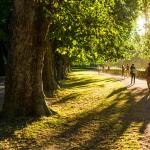
| There is a tree planting programme and more trees where they are most needed. | Secure WiFi is free in community spaces in every neighbourhood. |
| The foot tunnel is constantly open and the ferry remains free, convenient and runs from renewable energy. It is better monitored, cleaner and has more security and a working lift. | The power of the river is an energy source. The riverside is an attractive place, like in the Isle of Dogs, and a space that improves the community. River safety is improved to avoid accidents. |
The ten calls to action were (ordered by votes of support):
- a focus on increasing solar panels in the area
- spreading awareness, support and investment in community facilities to support heat and energy initiatives in North Woolwich
- supporting home energy use reduction by co-funding the costs of installation
- increased involvement in the community from London City Airport
- Tate & Lyle to be a centre for community and a source of heat energy for the local residents stronger cross sector relationships (e.g. between the private sector and local community groups) to raise funds and encourage economic investment in North Woolwich
- an education programme to support people to reduce their energy use
- local corporates to use their corporate social responsibility in the community
- the council to incentivise landlords to make homes more energy efficient
- more regular checks on the state of rental stock to make sure it is compliant and energy efficient (for all rented stock, social and private).
A few themes stood out.
The forum felt that local businesses that have a large presence in their area, particularly corporations like London City Airport and Tate & Lyle, needed to step up in terms of climate action, social responsibility, and being a ‘centre for the community’. They wanted to see corporate social responsibility have a tangible impact locally. At the same time, the role of the community or people was also present in almost all the recommendations. They were keen to play their part in some way, for example in community groups running awareness and education initiatives, being hubs for local projects or owning green spaces.
It is a good thing that this often overlooked part of Newham has been chosen to discuss and suggest solutions to the current subject of heat and energy. The sudden current rise in the cost of energy and heating is a cause for alarm to many residents in the country especially in Newham which is among the low income part of the country struggling with affordability.
At the last meeting, forum members presented their calls to action and vision to the Mayor of Newham and local councillors. Since the forum ended, the Climate Action Team and wider council in Newham have taken forward the recommendations. As of Spring 2026, they are acting on 5 of the 10 headline recommendations and have plans for 2 of the others. They are being considered in developing policies and strategies, including around new housing and regeneration plans in North Woolwich.
- Conduct retrofit assessments and start to retrofit social housing blocks to improve energy efficiency and cut energy bills
- Update the information on their website, so that homeowners, tenants and landlords have better information about energy efficiency and retrofitting
- Deepen their work with Community Energy Newham to install more solar panels and develop community energy projects
- Raise awareness of the forum’s vision and calls to action with local partners and networks with influence, like the Royal Docks Sustainability Network
- Start new conversations with local businesses about how they can invest in North Woolwich and what matters to the people living there
Several forum members told us throughout the process that they appreciated having this conversation centred on North Woolwich. When we asked for feedback at the last meeting, people were pleased to have had the chance to contribute to their local area. 88% of the forum members were confident that their contributions will be used by local authority decision-makers.
The challenges of how we heat and power our homes, businesses and communities are complex and will take time. The forum and its recommendations have shaped how Newham Council plans to engage people on further energy and housing projects in North Woolwich.