
More often or not, in participatory and deliberative processes, there will be elements of the process that need small group facilitation, or facilitation of table groups. Here are some hints and tips of good practice that can help.
At the start of your facilitated small group session always introduce yourself and outline your role as the facilitator, remind the group you primarily have three roles, they are;
- To get the group through the task - the ‘what’ they are there to do
- To manage the process - the ’how’ you are going to do it (process) and
- To manage the group dynamic - the ‘what is going on’
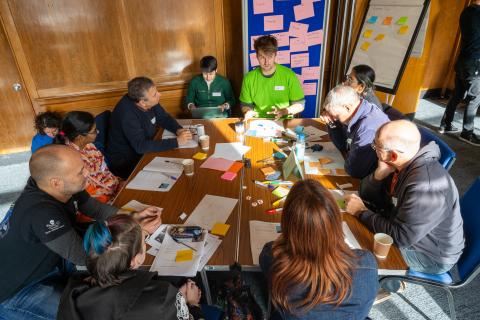
Also at the start, get the participants to introduce themselves to each other, where they are from, why they are here. It's important to build connections before tackling any content as genuine engagement and collaboration are more likely to occur when individuals feel connected to each other and the purpose of their gathering.
During the session, stay out of the content and don't offer personal opinions, it’s important to remain impartial and allow for participants thinking to emerge
A big part of the facilitator role is what we call intervening, stepping in to manage ‘something’.
- For example, if there is more than one person talking at the same time, to ensure conversation can be heard, just one person speaking at a time
- If people disagree, to ensure all sides get heard, one at a time, without interruption, but disagreement isn’t a bad thing, and we are not necessarily always looking for consensus
- If people agree, to capture alignment
- To make sure all who want to say something can and that the group hears them. This also means looking to see when someone wants to speak and inviting them to do so without interruption from others
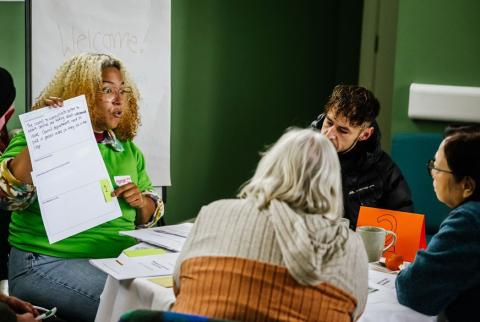
Questioning is also key to the role, and it’s good to have some well thought through questions in your toolbox, for example
- What else do we have to add that might be similar or new?
- What else is there that is different?
- What questions of clarification are there?
- What builds or amends are there?
- What about different viewpoints or perspectives?
- What’s not being said that needs to be heard?
Tables or small groups of up to ten are actually quite big, so when tackling questions, it might be more efficient to get the group to pair up, discuss the question(s) in pairs, then take feedback from each pair in turn. Don’t always take feedback from pairs in the same order, mix it up a bit. By working in pairs it reduces the amount of feedback you have to gather.
Playing back to the group what you have heard is important through intervening, and then summarising or paraphrasing
- Summarising is repeating, using the same words used by the speaker but in a shortened format, removing needless detail
- Paraphrasing is repeating, using similar words or phrase (your interpretation) to the words used by the speaker, expressing the meaning, checking for understanding and clarification
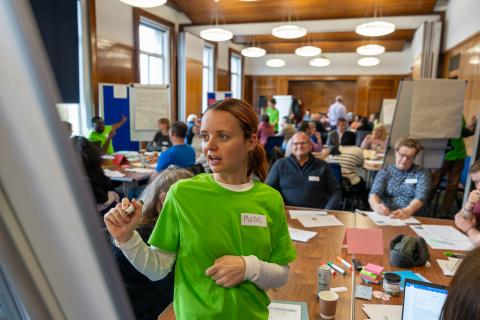
When capturing feedback, it’s often best to get the participants to capture their own thinking and feedback (where they are able to), maybe on post-it’s, cards or on a template/poster if available, otherwise you have to do all that capture yourself. But sometimes participants need support with this, so it might be you doing the capturing too!
If you are running out of time, and have not yet gathered all responses or feedback, have participants at least write it down and hand it to you so you do capture it.
We often talk about the fact that you are the best tool in the toolbox, self as instrument. It’s highly likely if you have a question because you are unsure about something, then someone else has too!
If you feel something isn’t quite right, it probably isn’t, if you sense disagreement or agreement there probably is some, so intervene, step in and both name and manage it!
You sometimes must intervene to allow others to speak and say what they want to, giving the same opportunities to participate and contribute, however just because someone isn’t saying much doesn’t mean they are not participating or getting involved..
Ensure equitable participation (if you are interested in learning more about how to build equitable engagement processes you can see our lce.org.uk website), not just allow those with the loudest voice or the most to say to dominate the conversation.