

Art belongs to everyone, everywhere. But too often, the decisions about how it's shared, and who it's for don't.
The National Gallery was founded by Parliament in 1824 with a clear purpose: to make great art accessible for the "enjoyment and education of all."
So who gets a say in its future? When 50 people from across the whole of the UK were chosen to help answer that, nearly two in three had never been to the National Gallery before.
NG Citizens was announced in July 2025: the first national citizens' assembly by a UK museum or gallery, building on the pioneering work of regional initiatives such as Birmingham Museums Citizens' Jury.
Assembly Members were brought together to respond to the question:

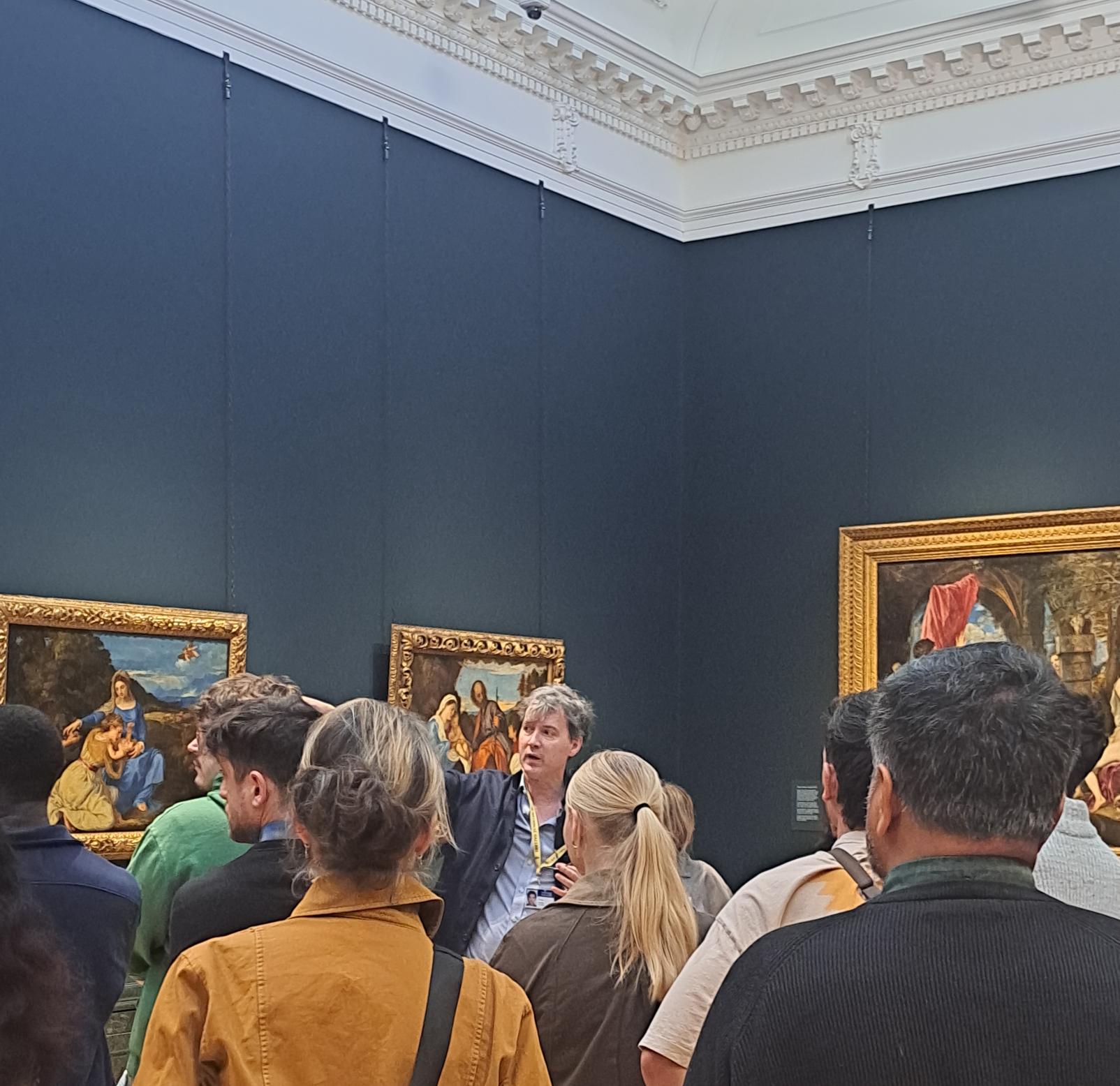
ABOVE The tour in Session Three.
Public consultation asks people what they think.
Deliberation asks people to think together.
Deliberation gives people the time, information, and space to sit with ideas, examine their own assumptions, and engage with perspectives and experiences different from their own. Through using deliberation, participants were able to find common ground between their differences and to disagree constructively.
That only works if everyone in the room can take part fully, and if there is more than one way to have your say.
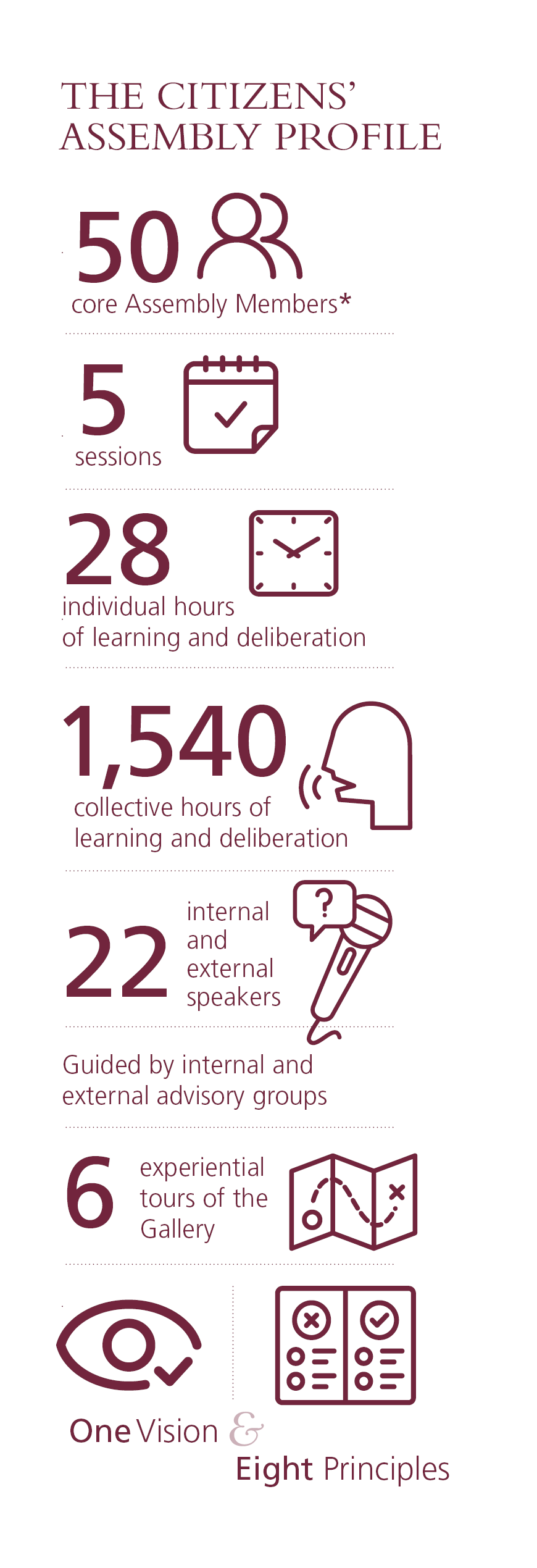
Participants were selected together with the Sortition Foundation via a civic lottery. In total, 15,000 invitations were sent to households across the four nations of the UK. Through NG Citizens, 50 people were chosen to reflect the diversity of the UK and were brought together across five sessions to learn, deliberate and build shared ideas for the future of the National Gallery. To hear from a wide diversity of people, particularly those currently underrepresented in the Gallery’s audiences, we weighted recruitment towards younger people and used London’s population as our benchmark for ethnic diversity. Once selected, we invited all Assembly Members to a 1-2-1 phone call. This was a chance to get to know each person and ensure everyone received the support they needed to be able to take part in the Citizens' Assembly. That support ranged from covering childcare and other care costs and booking accommodation in London, to sending out laptops and Wi-Fi dongles to those who needed them for the online sessions. After each Assembly session, we sent out a feedback form to participants to gather their insights. We reviewed the feedback after each session to adapt and improve the process to ensure it remained accessible and enjoyable for all.
In NG Citizens it was important to facilitate richer forms of engagement that could surface insight in different ways. By working together, within the Gallery’s walls, (three full day sessions out of five) we were able to immerse all Assembly Members in the atmosphere of the Gallery, showing them behind-the-scenes and sharing first hand evidence. Members used modelling, drawing, and silent discussions to surface ideas that writing or speaking alone can struggle to reach. In Session Three, a silent discussion on a large, shared mural enabled a more reflective form of dialogue that surfaced connections that might otherwise have stayed hidden. The output from this formed the basis of the Assembly's vision.
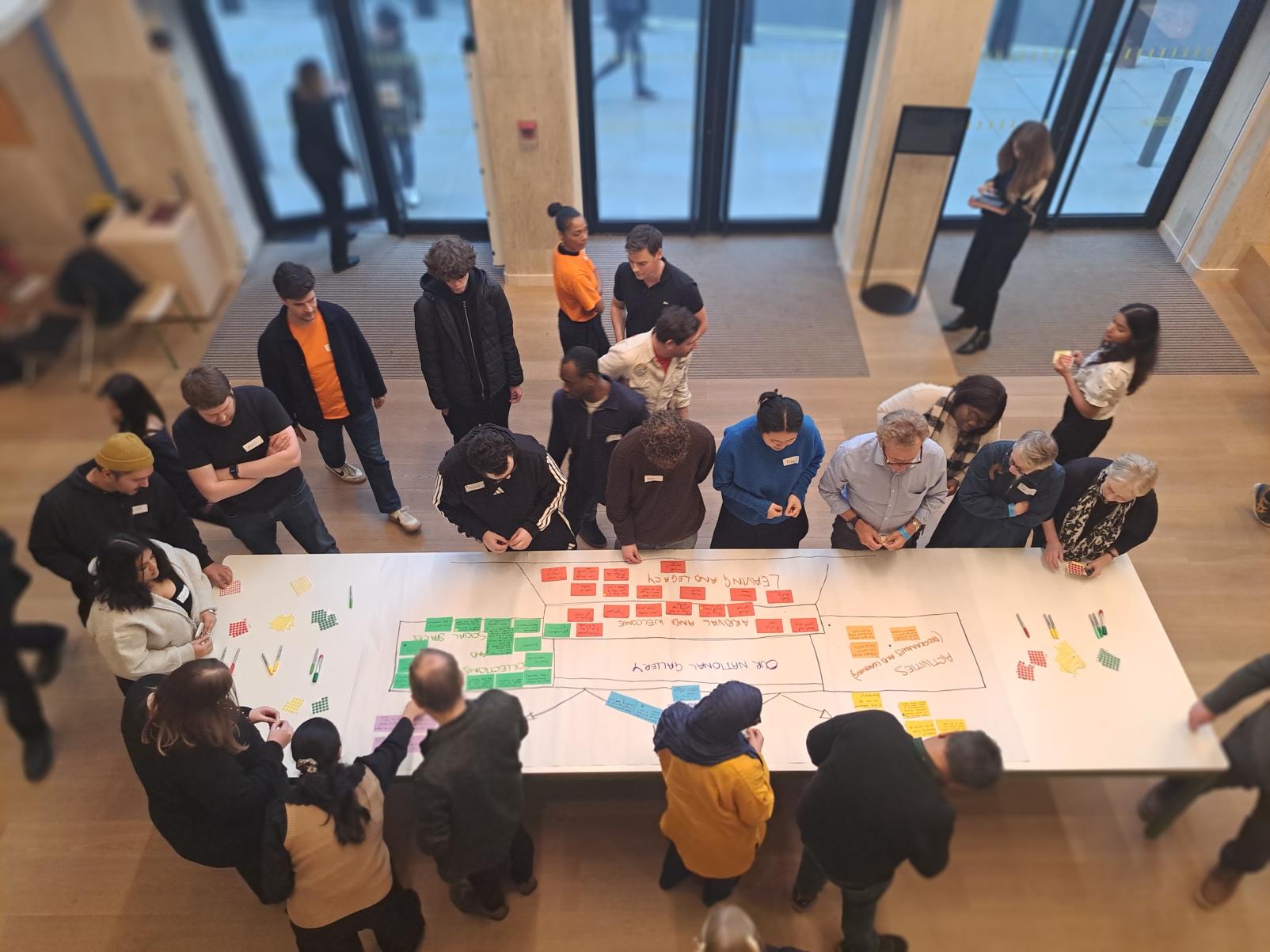
ABOVE The Visioning Activity in Session Three.
Part of the final principles were expressed as stories, reflecting the fact that principles are living ideas rather than static rules. The stories captured meaning, emotion, and lived impact, revealing what sits behind the principles, why they matter, and what they could tangibly look like in practice.
The vision is a clear statement of what Assembly Members would like the Gallery to become:
The UK's National Gallery belongs to the nation and welcomes everyone free of charge. The collection, through unique experiences of storytelling and human connection, is relevant to all ages.
The Gallery provides spaces for all people to engage with the paintings in a variety of ways, including new technologies. Through regional partnerships, digital access, and public decision making, the Collection reaches the whole nation.
The Gallery is inclusive and represents all of us; a place where people feel a sense of belonging, connection and inspiration.
Each Assembly Member cast eight votes for the principles they believed would best serve the Gallery's future. Eight draft principles emerged as the priority, out of an original 21 principles generated by the Assembly:
- Human Stories
- Diverse Audiences
- Bold Decision Making
- Commercial Opportunities
- Public Ownership and Hidden Stories
- Personalisation and Technology
- UK-wide Partnerships
- Collection Reflects the UK
The Vision and Principles are the result of this process and will help inform the delivery of the National Gallery's 10 year Strategy. They have been presented to the Gallery's Director Sir Gabriele Finaldi, Executive Committee, and all staff, to continue to build collective ownership. The Vision and Principles are in Assembly Members' own words.
In total, the Assembly involved 1,540 collective hours of learning and deliberation, 22 internal and external speakers and 6 experiential tours of the Gallery.
I've felt welcomed, heard, and valued throughout the process, and I appreciate the organisers' commitment to inclusivity and meaningful public engagement."
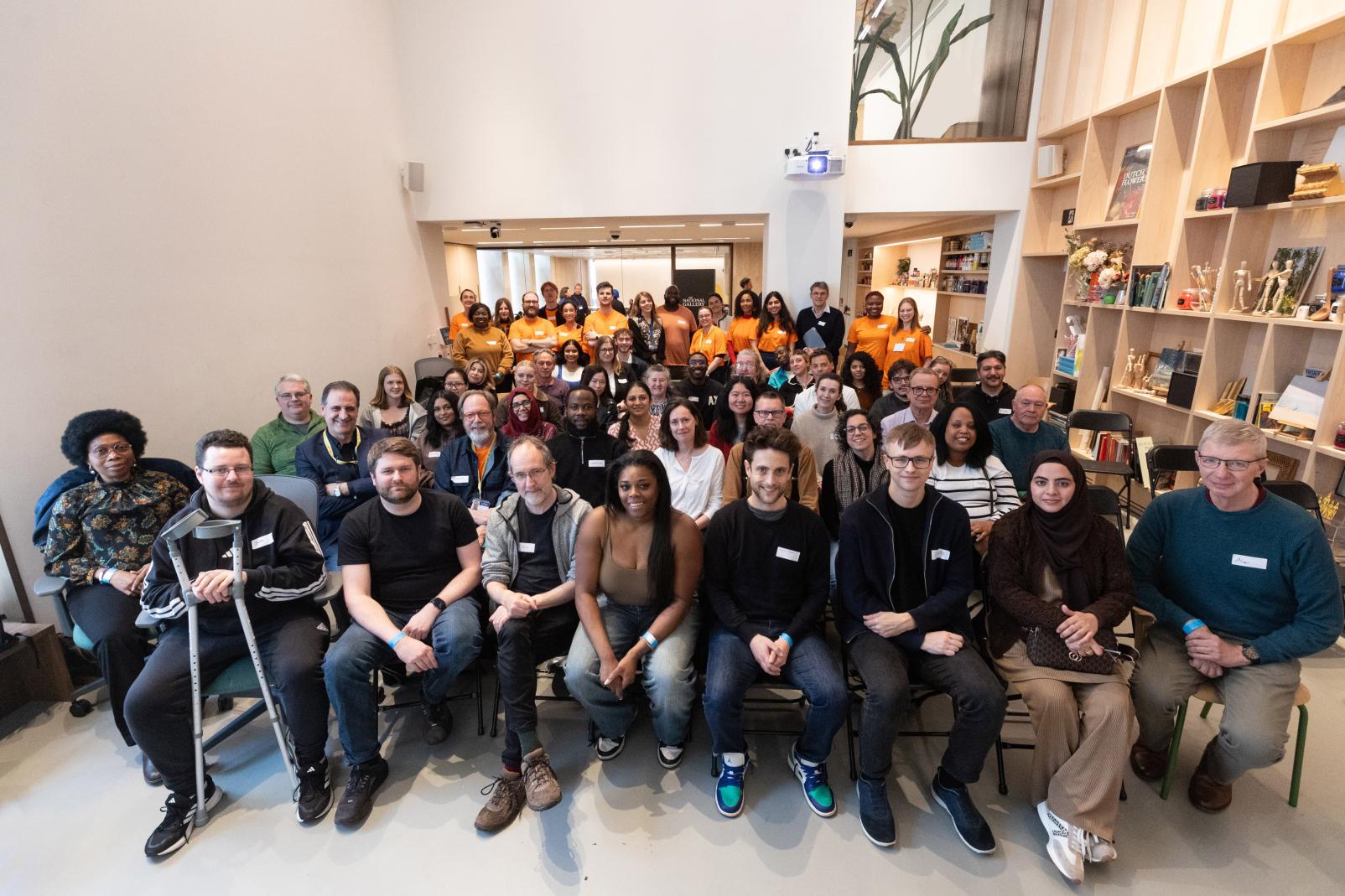
ABOVE Photo taken in Session Five of the whole group.
Citizens' Assemblies are recognised for their ability to effectively facilitate collective decision making. However, maintaining momentum once an Assembly concludes is a common challenge. To address this, NG Citizens takes place over five years, with the NG Citizens' Panel following the conclusion of the assembly.
The Panel will consist of three separate cohorts between 2026 and 2030. Each cohort will be made up of 15 former Assembly Members and will have three opportunities to meet. The purpose of the NG Citizens' Panel is to feed into new project development. Over 80% of Assembly Members said they would be interested in staying part of the Panel and will be selected at random to take part. While not all Assembly Members can take part in the first Panel cohort, all Members who have expressed interest will have the opportunity to take part later down the line.
The Gallery will take focused projects that will benefit from a UK public perspective to each NG Citizens Panel. In 2027, the Gallery will be working on the creation of a Guest Charter, and a deep dive into how it presents future Room 1 exhibitions that bring both historical and contemporary paintings together.
The support and interest from across the cultural sector and beyond, alongside the contributions of guest speakers and the growing Citizen Assembly community, have been instrumental in the success of NG Citizens phase one.
The Gallery has already begun exploring ways to put some of the ideas emerging from phase one into practice. These include introducing later opening hours during the summer, giving visitors more opportunities to start their evening with art or drop in after work; enriching exhibition spaces through sensory experiences that include light and sound; and removing barriers to engaging with the collection by making the audio guide free for all visitors.
The National Gallery considers the vision and principles an asset. They’ve said the democratically reached set of principles gives them “a public mandate to be brave.”
It is hoped that the project not only supports the Gallery to meet the needs of its audiences but also demonstrates the value of cultural organisations entering into dialogue with those they serve, to ensure they reflect and respond to their audiences.
Phase two will begin shortly, with further ideas and principles being developed through the NG Citizens Panel and translated into action, continuing to make the Gallery an ever-richer and more engaging experience for visitors.
To stay updated on the NG Citizens Panel, visit the National Gallery website.